Immersive Open Studio is a course-based artistic concept that turns spatial-audio infrastructure into a shared public platform for interactive audiovisual work. Realized at The Underground Atlanta in fall 2025, the studio brought a 32-channel system out of the university and into an accessible cultural venue.
Rather than rebuilding a technical system for every artwork, the project established a reusable environment for rapid prototyping, public presentation, and repeated collaboration. The project and its design process were documented in a paper presented at NIME 2026, examining how infrastructure, pedagogy, artistic production, and audience engagement can operate together.
02
Open Studio as a Platform
Five student groups developed Immerge, Since Everyone’s a DJ, Audenie, MACHINA, and Data Mirror: Fragmented Projections of Oneself, presenting the works through weekly public showcases. Each group used the same spatial-audio and projection infrastructure while pursuing a distinct artistic direction.
This shared foundation reduced the technical burden on individual groups and allowed students to concentrate on interaction design, composition, and iteration. It also tested whether a spatial system could support multiple artists and repeated public engagement instead of functioning as a one-off installation.
03
Since Everyone’s a DJ
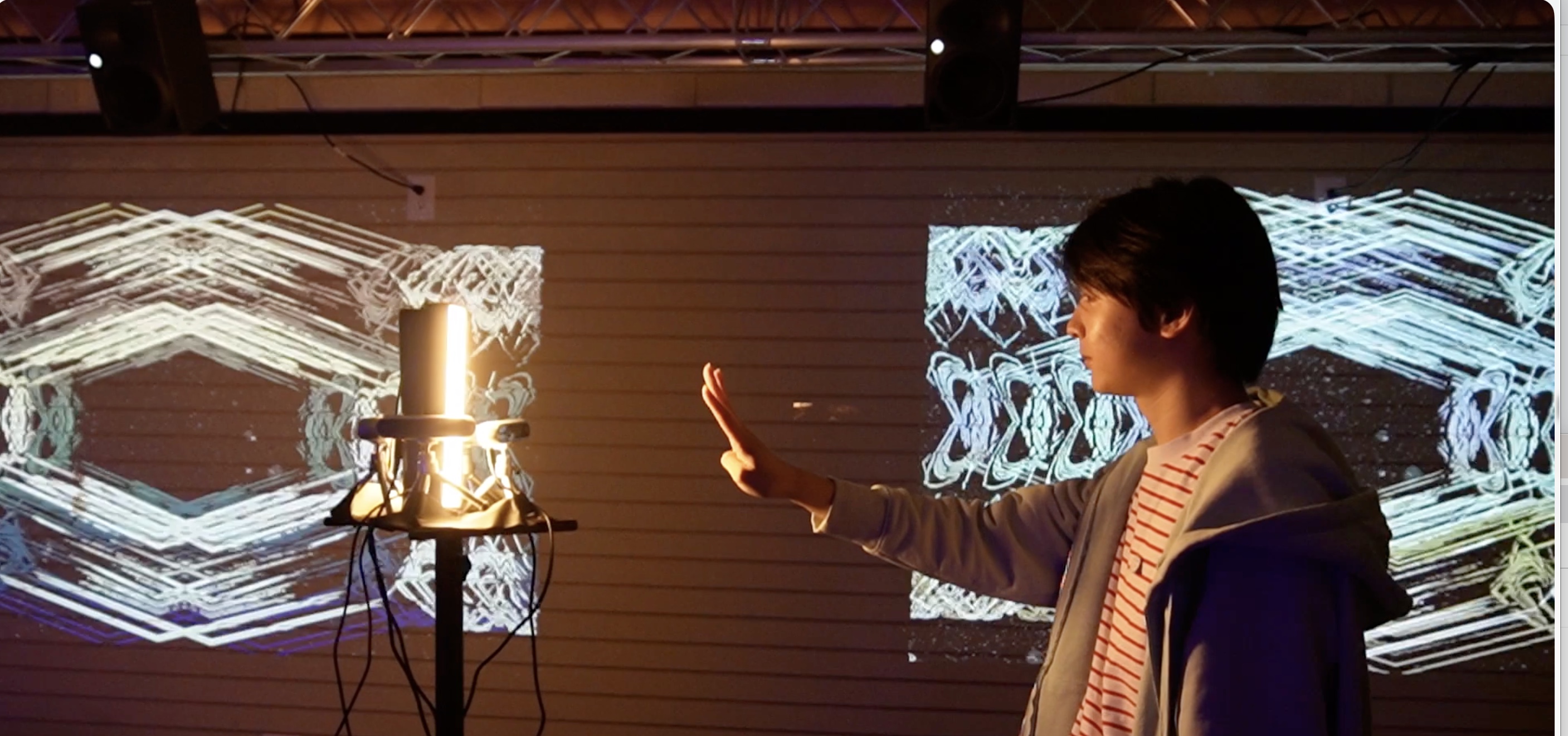
Since Everyone’s a DJ served as the paper’s detailed case study. Four Intel RealSense cameras and MediaPipe hand tracking let multiple visitors control Bass, Chords, Lead, and Drums through simple finger-count gestures.
Continuous movement shaped the performance after a layer was selected: horizontal hand position controlled spatial azimuth, vertical movement adjusted musical effects, and distance from the camera controlled volume. Ableton Live, Max/MSP, Reaper, Jitter, OSC, and Ambisonic decoding connected the sensing, sound, spatialization, and visual systems.
04
Design Reflections
Audience observations and voluntary feedback suggested that the long room, surrounding loudspeaker array, and movement-linked feedback encouraged exploration and a strong sense of immersion. Visitors often learned by watching others, imitating gestures, and then experimenting independently.
These formative insights were not intended as a formal user study. They nevertheless highlighted opportunities for clearer entry cues, stronger visual feedback, more perceptually distinct audio mappings, and smoother handoff between overlapping camera regions.
SPATIAL INFRASTRUCTURE
Two rooms, one reusable system
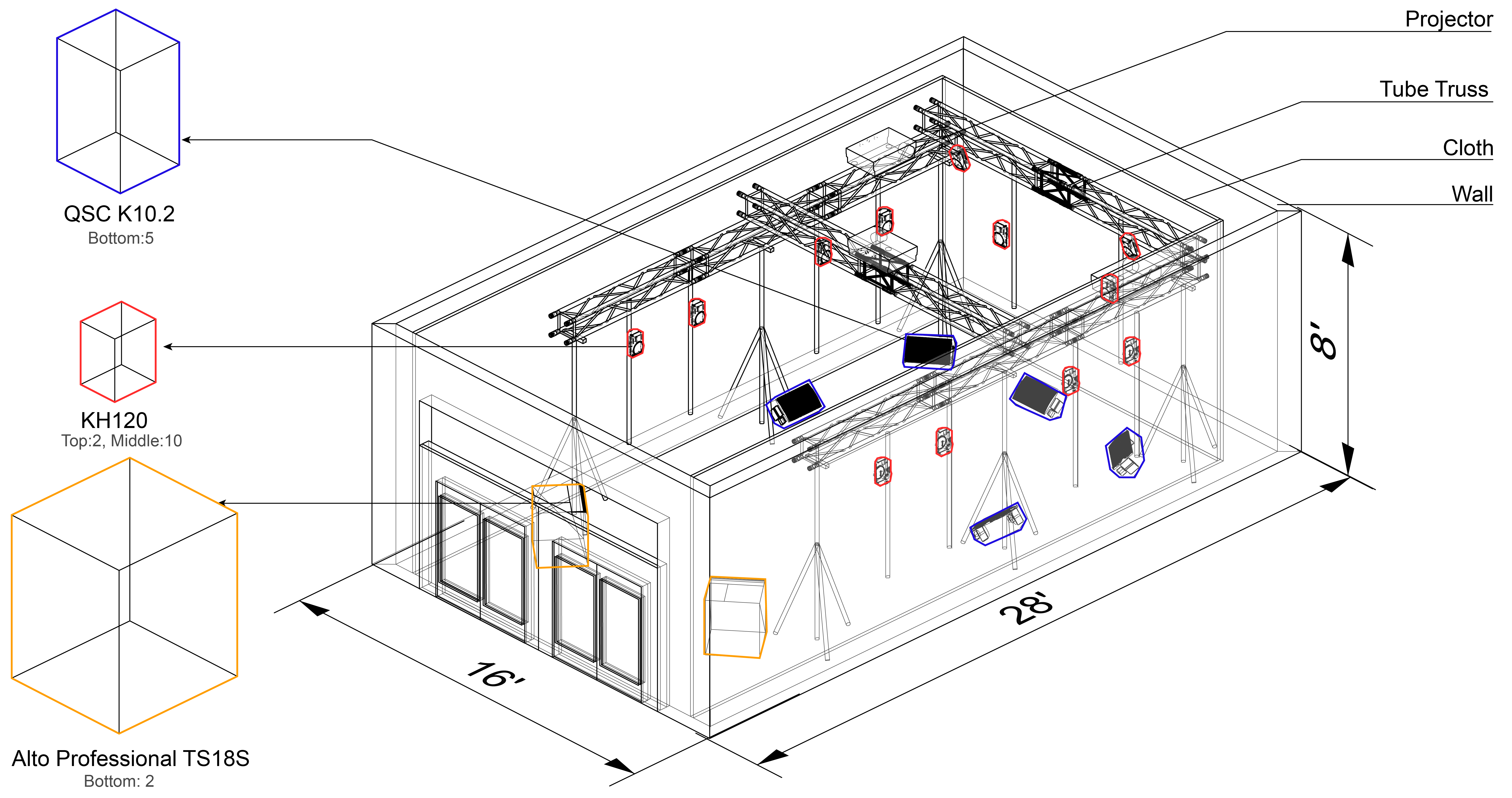
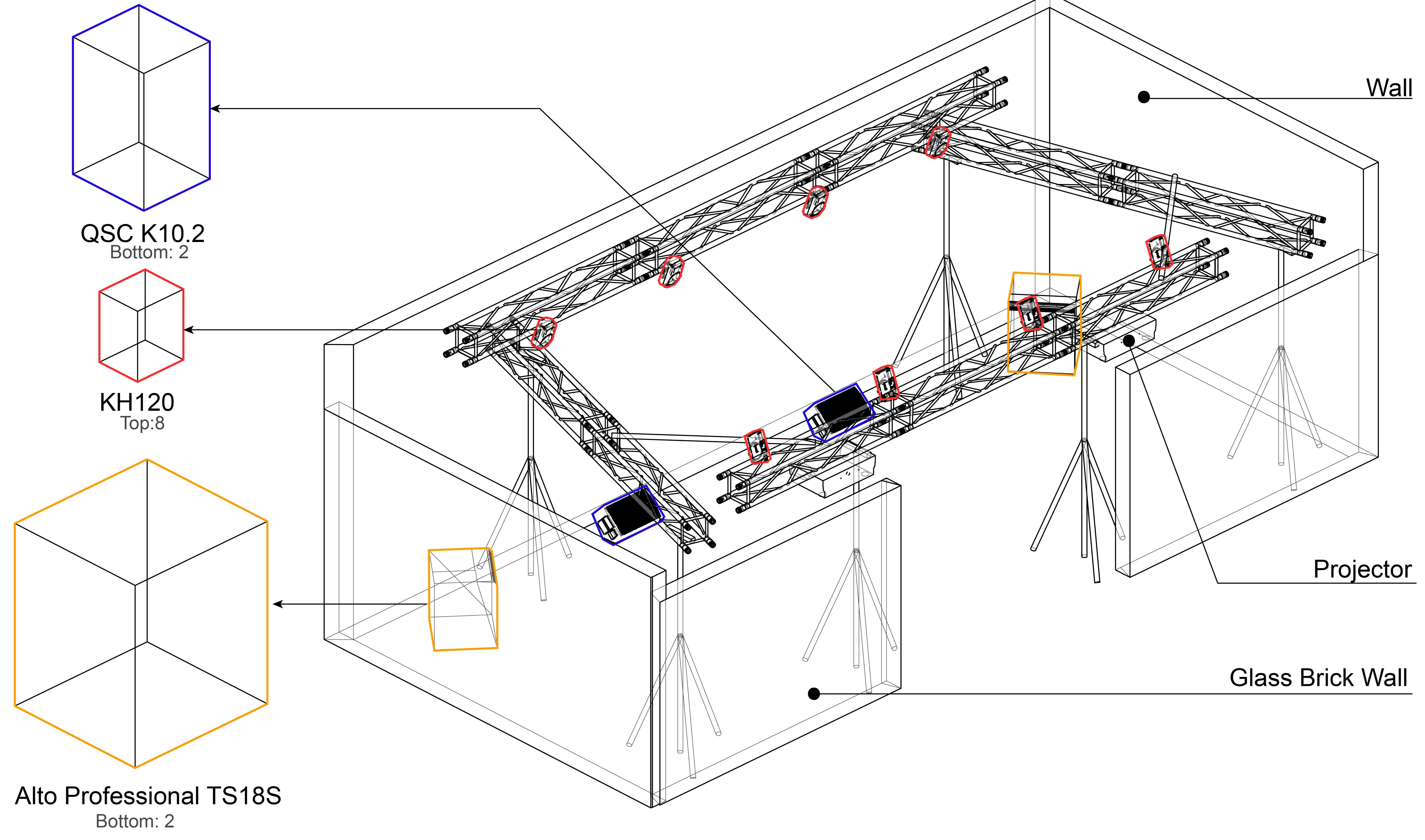
A flood forced the installation to move after three public performances. The comparison shows how the same core equipment was safely reconfigured for a new architectural setting.
Setup I · 14 × 28 × 8 ft · 270° projection
Tunnel Dimension
The original MARTA tunnel used a three-layer loudspeaker array supported by six truss stands, with three projectors covering the canvas-lined sides of the room.
2 upper + 10 middle KH120
5 QSC K10.2 + 2 Alto subwoofers
3 projectors
Setup II · Two-layer array · Parallel projection
Adapted Layout
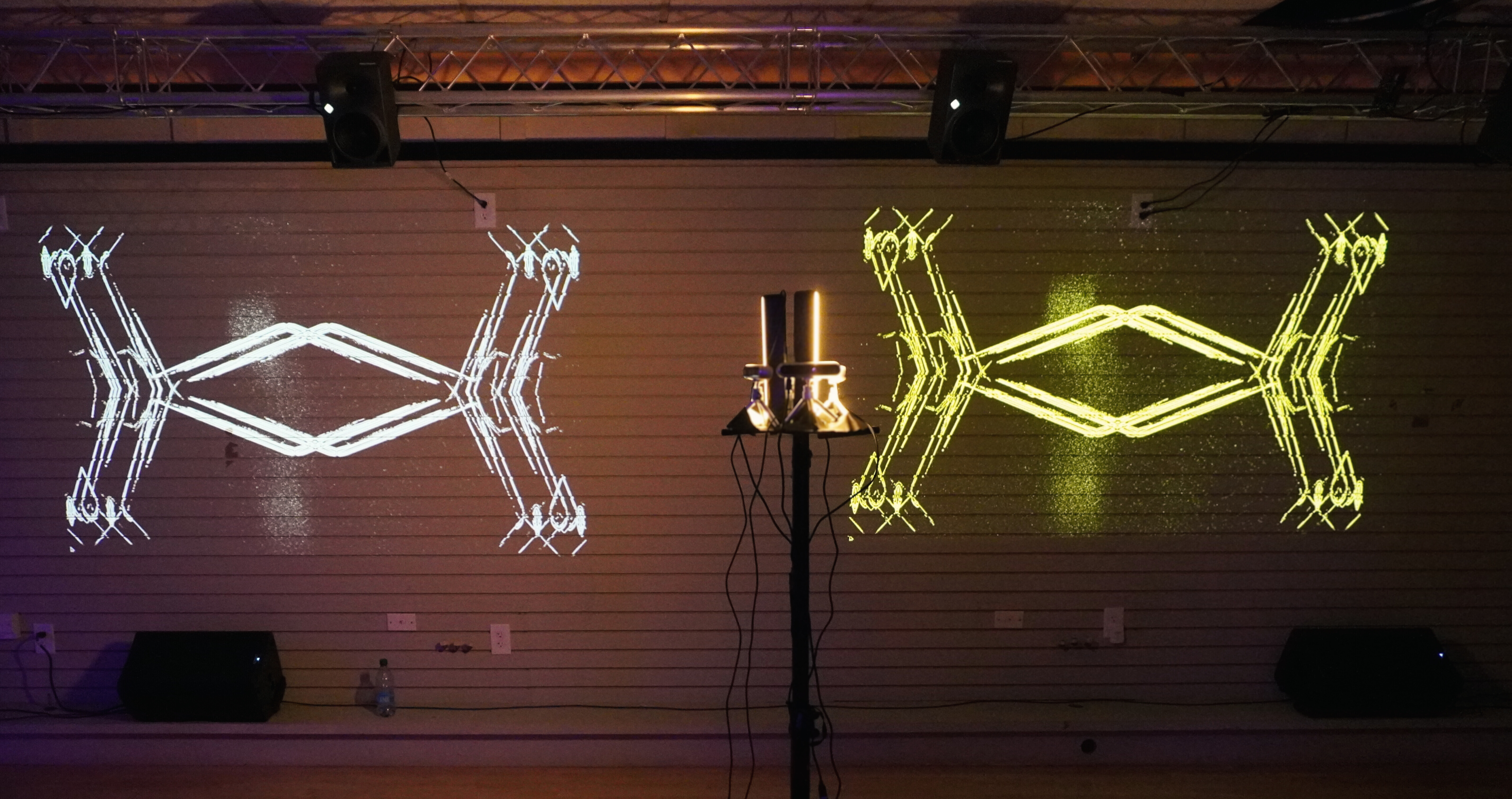
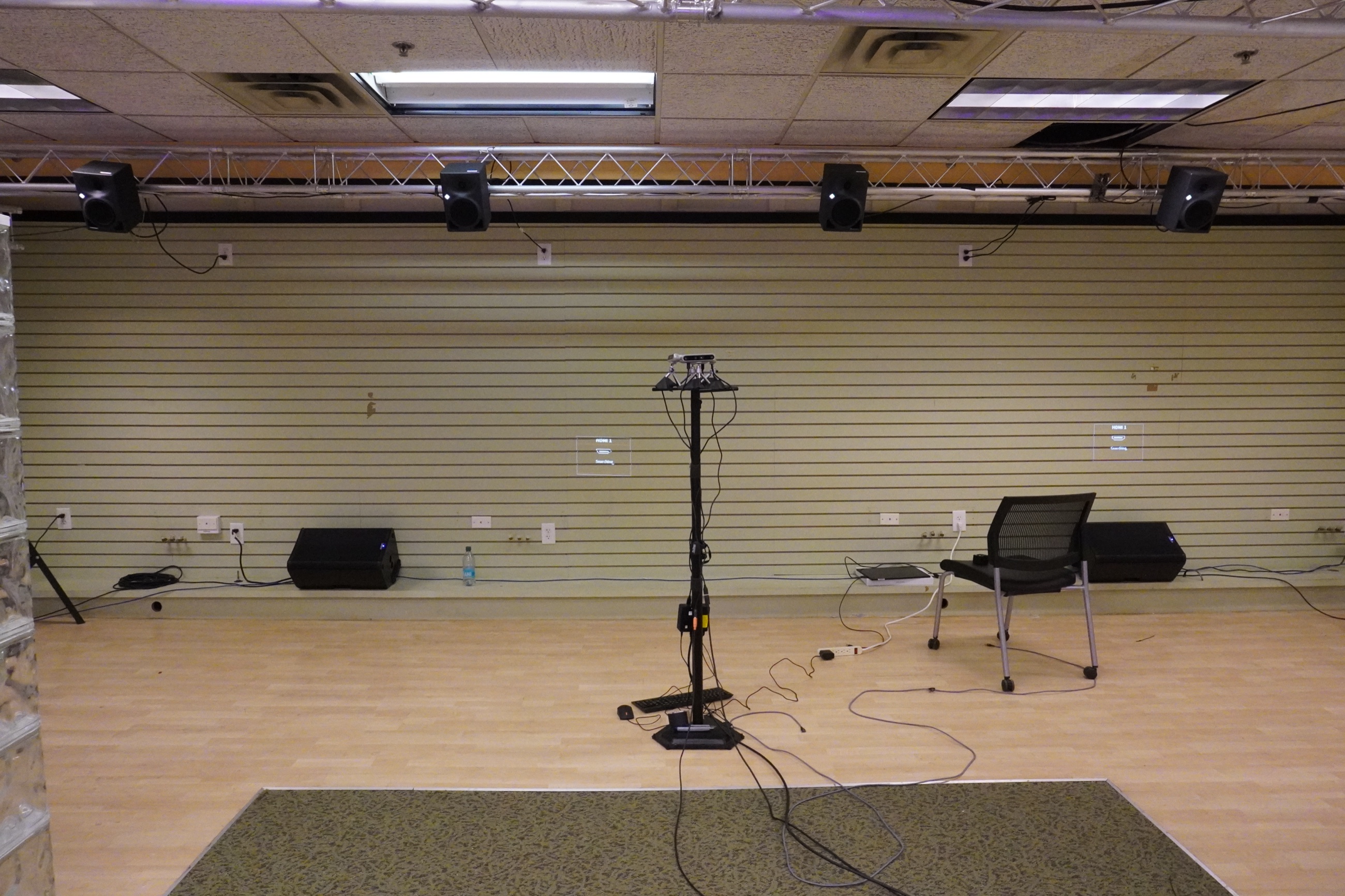
After flooding, the system was rebuilt in a safer second-floor room. A lower ceiling, glass-block walls, and limited projection surfaces required a more compact two-layer configuration.
10 upper KH120
2 QSC K10.2 + 2 Alto subwoofers
2 parallel projectors
DOCUMENTATION
Process & Place
Immersive Open Studio · project filmTunnel dimension · venue setupGesture-based audiovisual interactionPerformance setup and projection